彭坚 Jian Peng
湖南大学设计艺术学院副教授、博士生导师
创新创业型设计学者
湖南省青年科技人才(荷尖)
益阳市首批高层次人才
湖南省现代竹结构工程材制造及应用工程技术中心 主任
湖南省新型环保材料和产品工业设计中心 主任
从一根竹条开始
一根竹条为什么适合做某种椅子,却不适合另一种结构?改变连接方式、加工路径或使用环境之后,答案是否也会改变?我从这类具体问题出发,研究材料的特殊性如何形成、如何被认识,以及如何进入设计判断。
我的长期研究主线是“材料特殊性与材料智能”,以竹为持续的研究探针,并与木材及其他材料比较。我关注的不仅是材料具有什么性能,更是这些性能在什么条件下成为设计可用性,又在什么过程中被忽略或失配。材料的生长、加工、感官经验与产业供给,都是理解这一问题的线索。
我本科毕业于海南大学信息与计算科学专业,博士毕业于国防科技大学管理科学与工程专业。数学与系统工程训练,以及材料研究、复杂系统诊断和交互设计方面的工作,为我连接数据分析、设计实践与人工智能提供了基础。我也持续参与竹产业合作,将真实的材料与制造问题带入研究和教学。
材料特殊性与材料智能
以竹为长期研究探针,连接材料、制造、经验与设计判断。
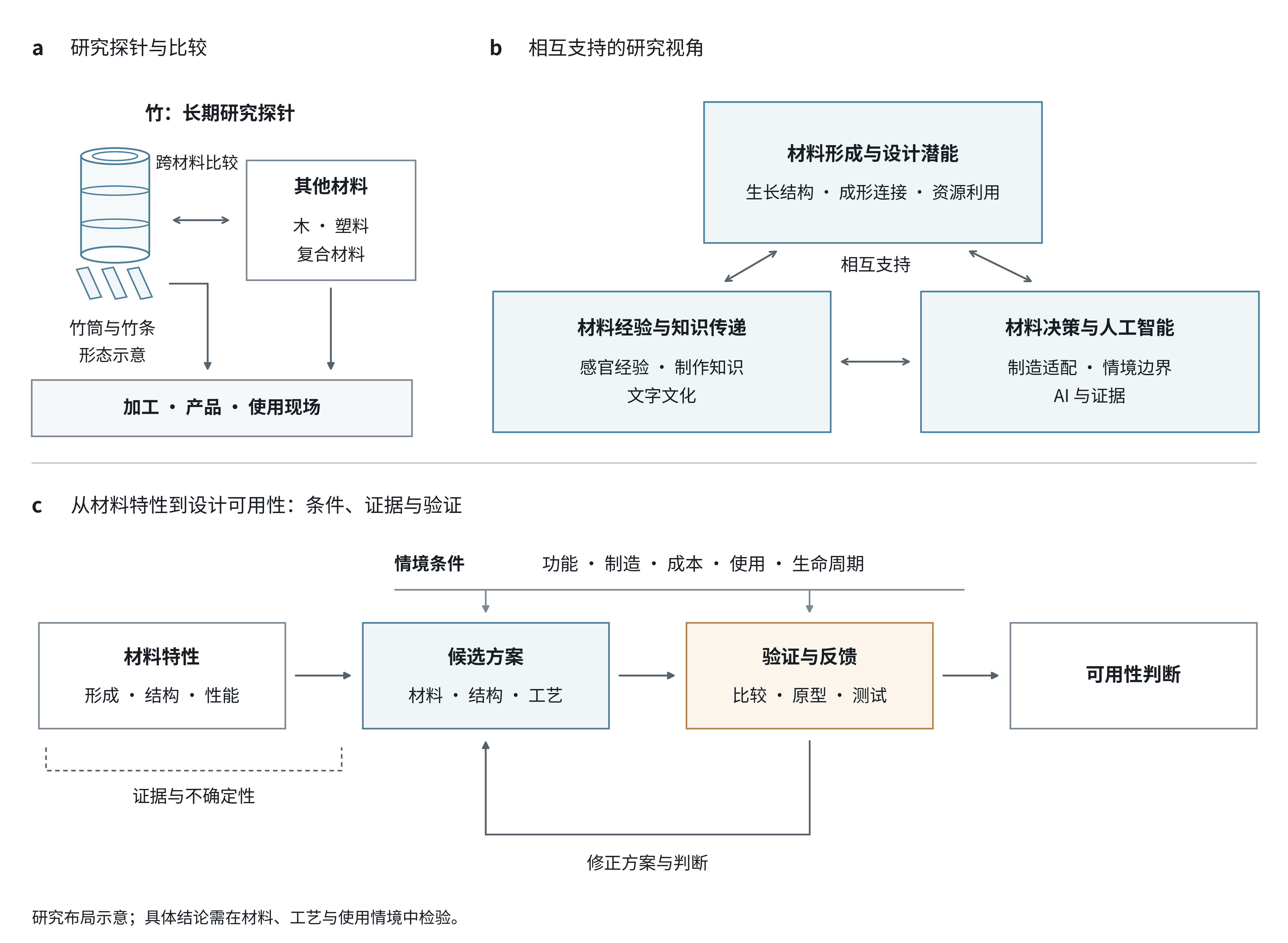
图 1 以竹为探针的研究布局。a,研究探针与比较;b,相互支撑的三个视角;c,情境条件下的证据、方案与验证。
材料形成与设计潜能。材料的生长结构、原始形态与加工路径,怎样影响构件、连接和产品的设计空间?我关注竹条家具、工程竹材与含竹复合材料,从形态、结构和制造条件的关系出发,探索材料特性的利用方式与资源利用效率,并通过方案比较、制作或实验检验设计想法。
材料经验与知识传递。材料知识不仅来自测量,也来自身体感受、制作经验与文化记录。我关注气味、声音、触感及加工过程中的经验,探索这些知识如何被表达、传递与检验;同时从文字、器物和工艺中追溯材料线索,让容易被忽略的经验成为可讨论的设计知识。
材料决策与人工智能。材料与方案是否适宜,需要结合功能、制造、成本、使用环境和生命周期判断。我关注材料替代的适用边界,以及产品结构、使用与维护设计对应用结果的影响;进一步探索 AI 如何组织证据、识别制造失配并支持方案比较,使判断过程及其不确定性能够被追溯和核查。
代表性成果与产业实践
以下论文展示了材料表征与改性、系统建模及交互评价方面的研究基础。新的研究方向在此基础上展开;感官知识与 AI 辅助材料判断等内容属于持续探索的研究议题。
代表论文
年份 |
论文与研究主题 |
本人角色 |
发表信息 |
2025 |
A comparative analysis on methodologies for determining the saturation fiber point in bamboo
竹材纤维饱和点测定方法比较 DOI 10.1016/j.indcrop.2025.121239 |
通讯作者 |
Industrial Crops and Products
232, 121239 |
2024 |
Surface layer reinforcement modification for wood with high strength and flame retardancy performances
木材表层强化与阻燃性能 DOI 10.1016/j.conbuildmat.2024.138672 |
通讯作者 |
Construction and Building Materials
450, 138672 |
2023 |
Fault Prediction for Electromechanical Equipment Based on Spatial-Temporal Graph Information
时空图信息与设备故障预测 DOI 10.1109/TII.2022.3176891 |
通讯作者 |
IEEE Transactions on Industrial Informatics
19(2), 1413–1424 |
2023 |
智能头盔的多模态交互评价与优化设计
智能产品的多模态交互评价 DOI 10.3901/JME.2023.11.117 |
第一作者 |
机械工程学报
59(11), 117–128 |
年份按正式卷期列示;完整书目信息与论文请见 DOI。
代表项目与专利
时间/状态 |
项目或专利 |
本人角色 |
类型/登记信息 |
2025—2028 |
文化科技融合的竹产业战略规划与设计系统 |
主持 |
产业合作项目 |
2024—2026 |
绿色装配式竹构件制备及其连接技术研究与示范 |
主持 |
湖南省重点研发计划 |
已授权 |
一种竹木高频连续接长设备 |
第一发明人 |
实用新型专利
ZL 2020 2 1744609.7 |
项目日期为计划周期;专利列示授权状态。
研究、培养与合作
研究生:从具体观察走向可检验的问题。欢迎对材料、产品、数据、感官体验或产业创新感兴趣的学生交流。课题可以从一件产品、一道工艺或一次日常观察开始,逐步完成问题界定、证据收集、方案构建与验证。我重视设计思维、数据思维与系统思维的结合,期待学生保有好奇、主动推进工作,并能清楚解释方法选择与结论边界。
学术同行:围绕材料与设计的关系开展合作。我欢迎在材料与制造、设计研究、感官与文化知识、数据与人工智能等领域开展跨学科合作。合作可从共同界定问题、比较材料或研究情境开始,围绕证据来源、方法适用性和设计判断展开讨论。现有材料、系统诊断与交互研究构成方法基础,感官知识与 AI 辅助材料判断是进一步探索的方向。
企业伙伴:从产品与生产问题形成研究任务。与产业伙伴的合作,为研究提供真实的制造问题与合作场景。我关注现有材料与工艺中的产品机会、构件及连接方案、制造适配和资源利用。合作从明确的产品或生产问题出发,结合企业条件推进资料分析、方案比较与原型验证;成果形式、知识产权及实施范围依据具体项目约定。
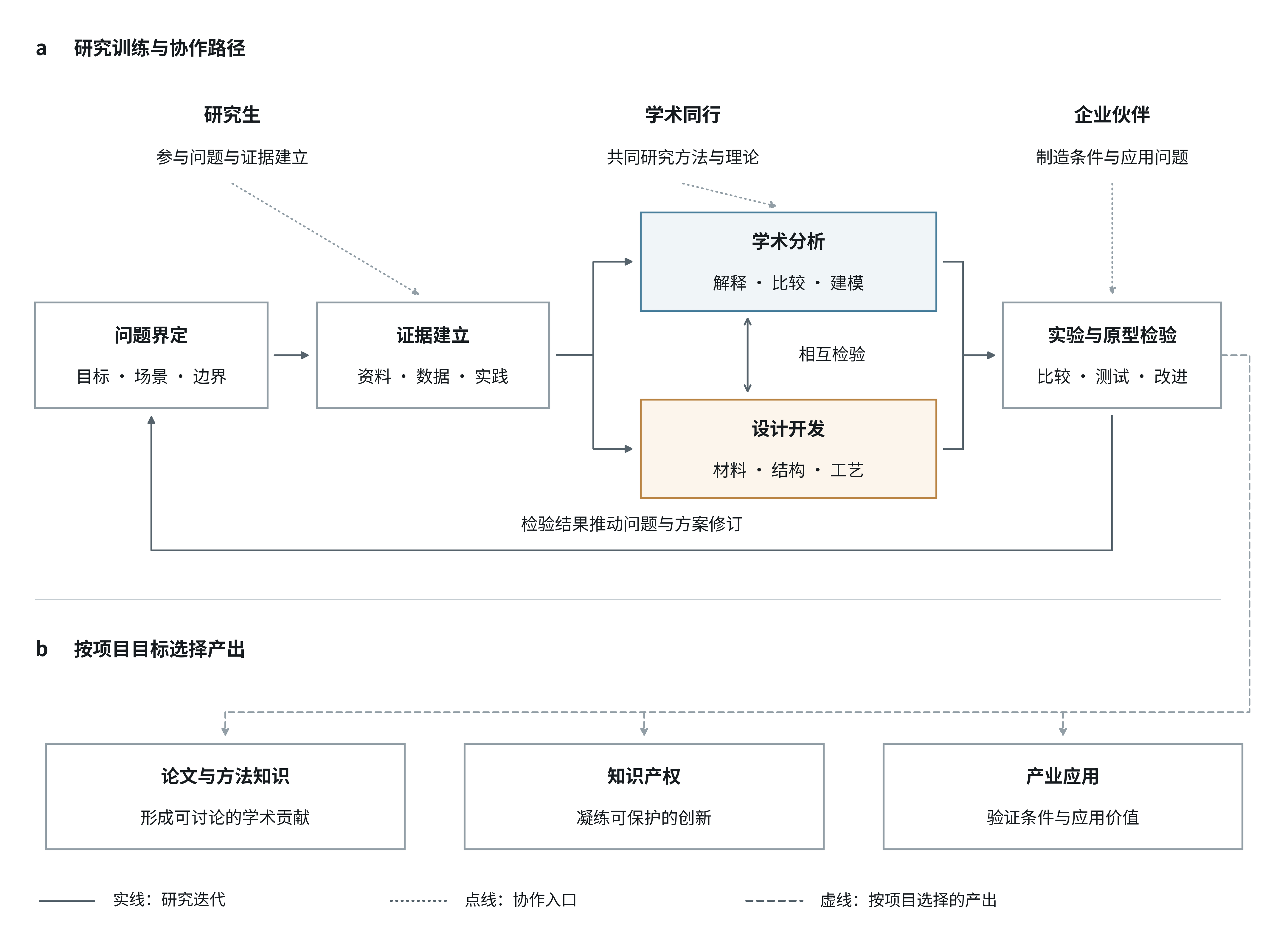
图 2 研究训练与协作路径示意。验证结果可反馈到问题与方案;具体方法、成果和实施范围随项目确定。
教学与联系
我承担过《数据科学导论》《产品服务系统》《航空航天装备设计》及创新创业相关课程的教学,鼓励学生在真实问题中学习研究、设计与协作。学术交流、研究生咨询与产业合作,请联系 jianpeng@hnu.edu.cn。
Jian Peng
Material Specificity and Material Intelligence
Using Bamboo as a Research Probe
Jian Peng is an Associate Professor of Industrial Design and a PhD supervisor in the School of Design at Hunan University. He was selected for Hunan Province’s Young Science and Technology Talent Programme (“Hejian”) and recognized in Yiyang’s first cohort of high-level talents. He is Director of the Hunan Engineering Research Center for Manufacture and Application of Modern Bamboo Structural Materials and the Hunan Industrial Design Center for New Environmentally Friendly Materials and Products.
Why is a bamboo strip suitable for one chair but unsuitable for another structure? How does the answer change with the connection, manufacturing process or use environment? Starting with concrete questions, his long-term research examines material specificity and material intelligence. He uses bamboo as a research probe, with comparisons across materials, to understand when material properties become usable design possibilities and when they are overlooked or mismatched.
His research connects three areas: material formation and design potential; material experience and knowledge transmission; and material decision-making and artificial intelligence. These areas address the relationships among growth structures, manufacturing, sensory and cultural knowledge, and evidence-based design decisions. His current agenda includes how AI can support material comparison while making the evidence, context and uncertainty open to scrutiny.
Peng holds a bachelor’s degree in Information and Computational Science from Hainan University and a PhD in Management Science and Engineering from the National University of Defense Technology. His work in material research, complex-system diagnostics and interaction design provides a foundation for connecting data analysis with design practice. Collaboration with the bamboo industry brings manufacturing and product questions into his research and teaching.
He welcomes prospective graduate students interested in materials, products, data, sensory experience or industrial innovation. Supervision emphasizes problem definition, evidence gathering, design development and careful validation. He welcomes interdisciplinary academic collaborations and works with industrial partners on material and process opportunities, component and connection design, manufacturing compatibility and resource use. Collaboration scope and outputs are agreed for each project.
Contact: jianpeng@hnu.edu.cn
